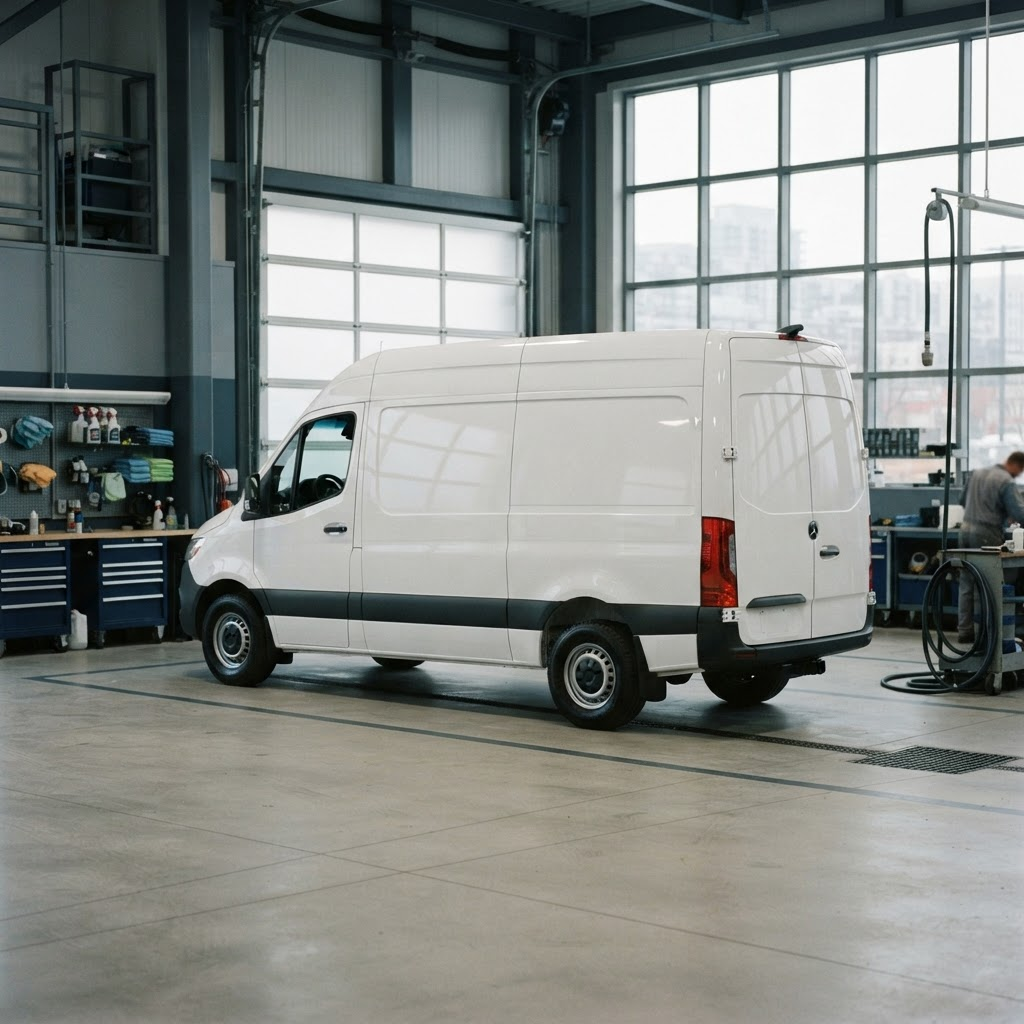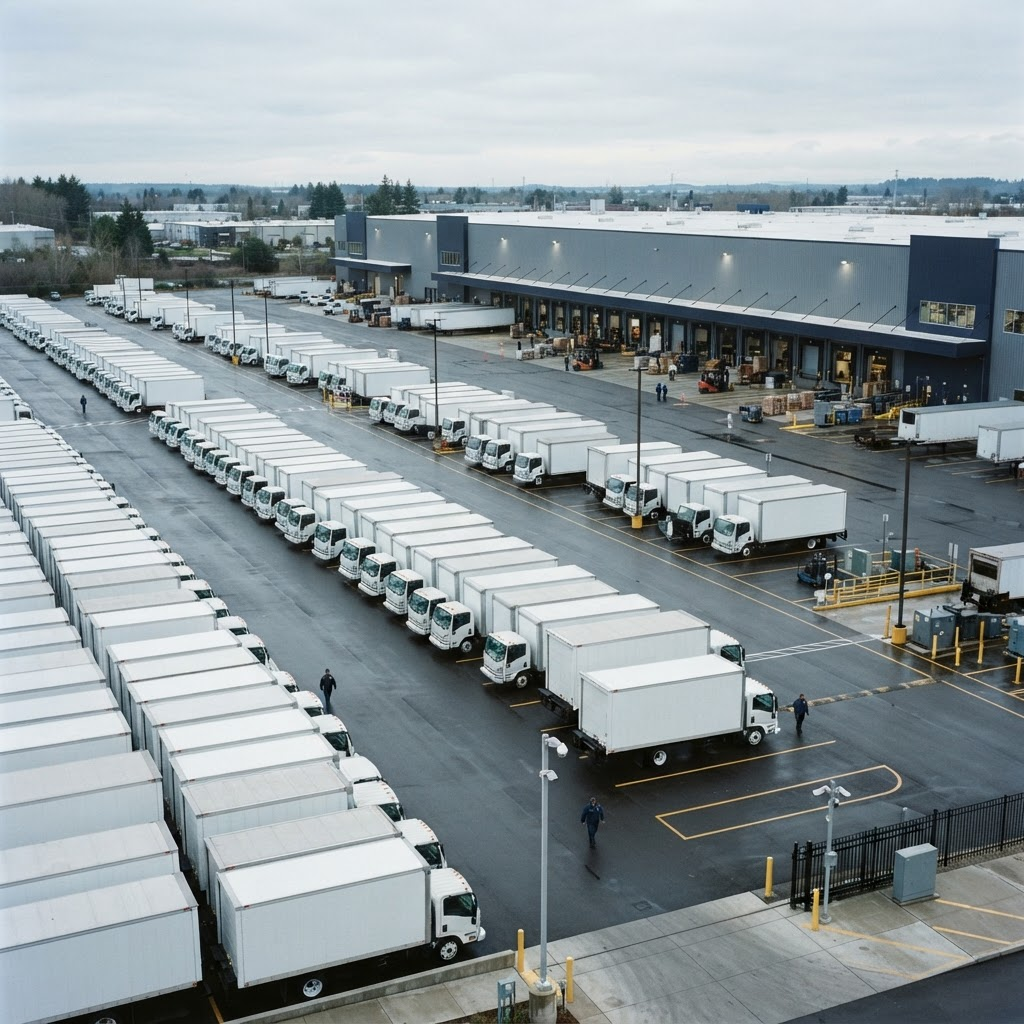
Fleet reconditioning is the systematic process of restoring a commercial vehicle to a presentable, road-ready condition — addressing cosmetic damage, accumulated wear and tear, and other issues that build up as a vehicle works. Unlike a one-off repair, reconditioning is usually applied consistently across many vehicles and repeated over a fleet’s life, because the underlying wear never stops accumulating.
For operators running delivery vans, box trucks or service vehicles, reconditioning is less about fixing a single incident and more about managing the ongoing condition of an entire asset base. That distinction is what separates it from traditional body-shop work.
What fleet reconditioning actually covers
Reconditioning is a broad category. In practice it typically includes several related types of work, each targeting a different way a working vehicle loses value or presentability:
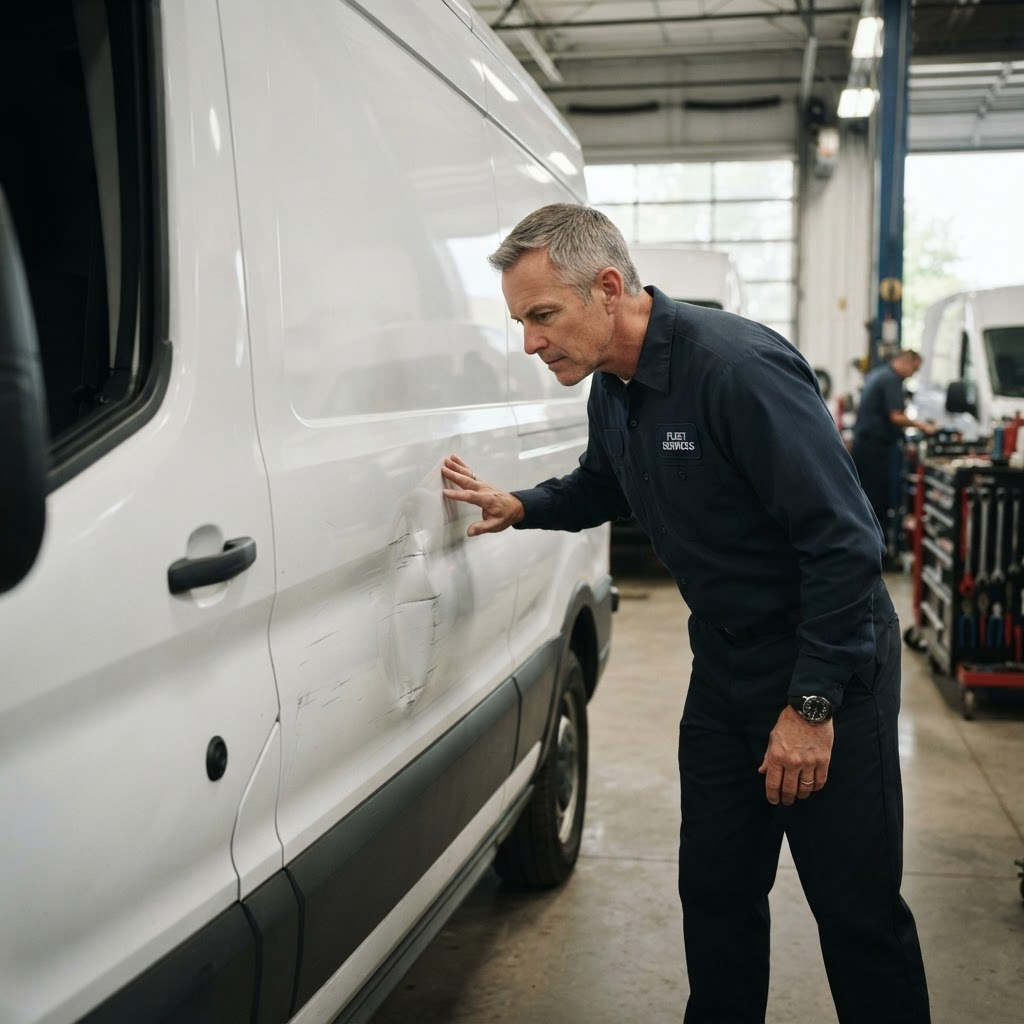
- Cosmetic and collision-related damage — dents, dings, scuffs and minor panel damage that don’t warrant a full insurance repair.
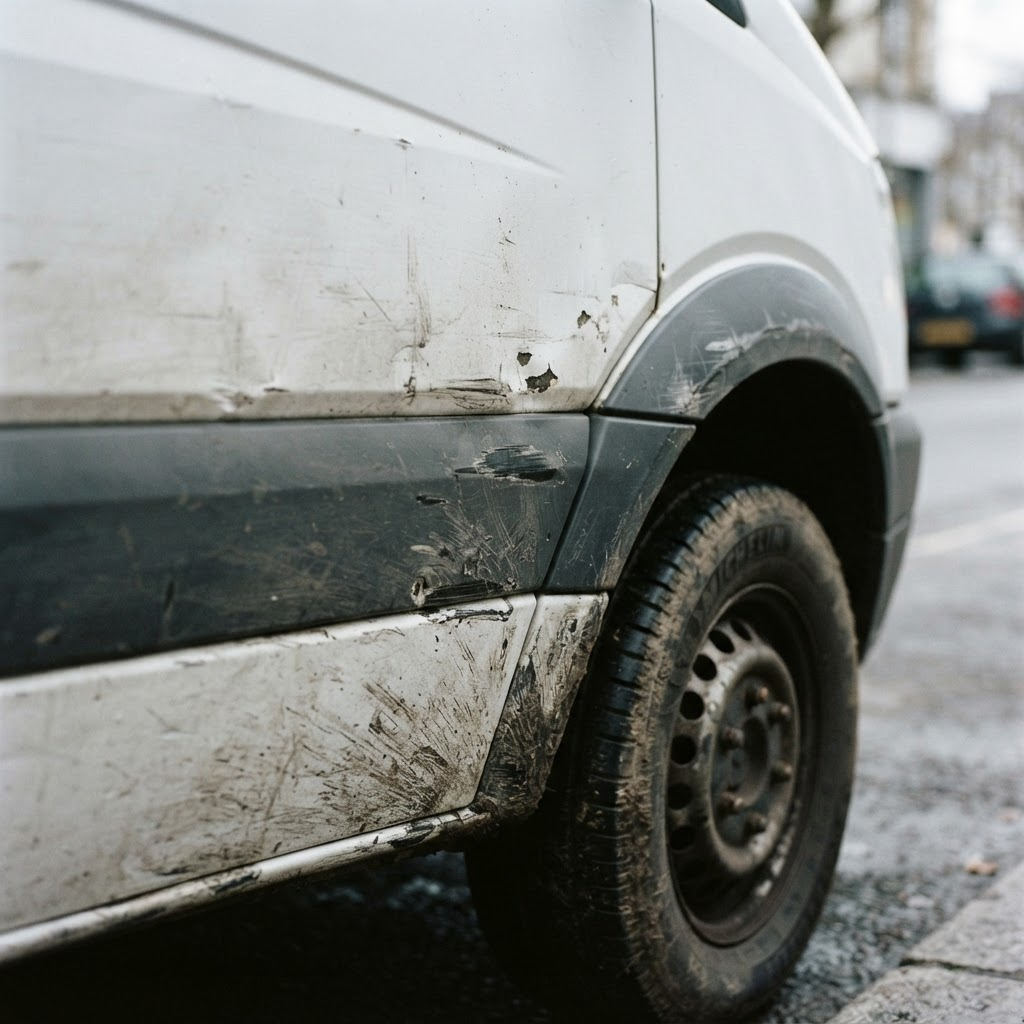
- Wear and tear — the accumulated scratches, scrapes and surface damage that build up across thousands of working miles.
- Paintless dent repair (PDR) — restoring dents without repainting, preserving the original factory finish.
- Paint and cosmetic repair — targeted refinishing of scuffs and scratches to keep branded vehicles looking right.
- Redeployment reconditioning — preparing a vehicle to be rebranded or transferred to a new operation or market.
- End-of-life / retirement reconditioning — restoring condition before remarketing to recover more resale value.
Why fleets treat reconditioning as ongoing
A commercial vehicle in daily service is constantly accumulating small damage: a loading-dock scrape here, a parking-lot ding there, curb rash on the lower panels. Individually, none of these justify pulling a vehicle out of rotation for a week. Collectively, they erode brand presentation and resale value.
Because the damage is continuous, the response has to be as well. Operators that treat reconditioning as a recurring program — rather than reacting only when a vehicle looks bad enough to complain about — tend to keep their fleets more consistent and preserve more value at turn-in or resale.
How reconditioning protects fleet value
Reconditioning works on three fronts at once. It protects the vehicle’s residual value, so assets sell or turn in for more. It protects brand presentation, since a branded delivery van is a moving billboard. And, when delivered efficiently, it protects availability by minimizing the time a vehicle spends out of service.
The best reconditioning program is the one you barely notice — vehicles simply stay presentable, valuable and on the road.
Where FRS fits
Fleet Reconditioning Services was built specifically around commercial fleet workflows rather than treating fleet work as secondary to insurance collision repair. FRS management reports that its reconditioning can run 30–50% below traditional body-shop cost for applicable work, with a target turnaround of 24–72 hours per qualifying vehicle, often delivered on-site at the fleet’s own depot.
If you’re evaluating whether a reconditioning program makes sense for your fleet, the next articles in this series compare reconditioning to collision repair and explain how downtime affects last-mile operations.
Frequently asked questions
- What is fleet reconditioning?
- Fleet reconditioning is the systematic restoration of a commercial vehicle’s appearance and condition — addressing cosmetic damage, wear and tear, and presentation issues — so the vehicle stays valuable, on-brand and in service. It is typically applied consistently across a fleet and repeated over the vehicles’ working life.
- How is fleet reconditioning different from collision repair?
- Collision repair is built around insurance claims and structural damage from accidents, often taking weeks. Fleet reconditioning is right-sized to the everyday cosmetic and wear damage that accumulates on working vehicles, prioritizing speed, cost efficiency and keeping vehicles available.
- How long does commercial fleet reconditioning take?
- It depends on the scope of work, but reconditioning is designed to be far faster than a traditional body-shop cycle. FRS, for example, targets a 24–72 hour turnaround per qualifying vehicle and often performs the work on-site to avoid transport delays.
How FRS can help
Fleet Reconditioning Services
The FRS Editorial Team publishes educational guidance on commercial fleet reconditioning, fleet uptime and vehicle lifecycle management, drawing on more than three decades of reconditioning and technician-training experience across the Fleet Reconditioning Services and Ding King organizations.