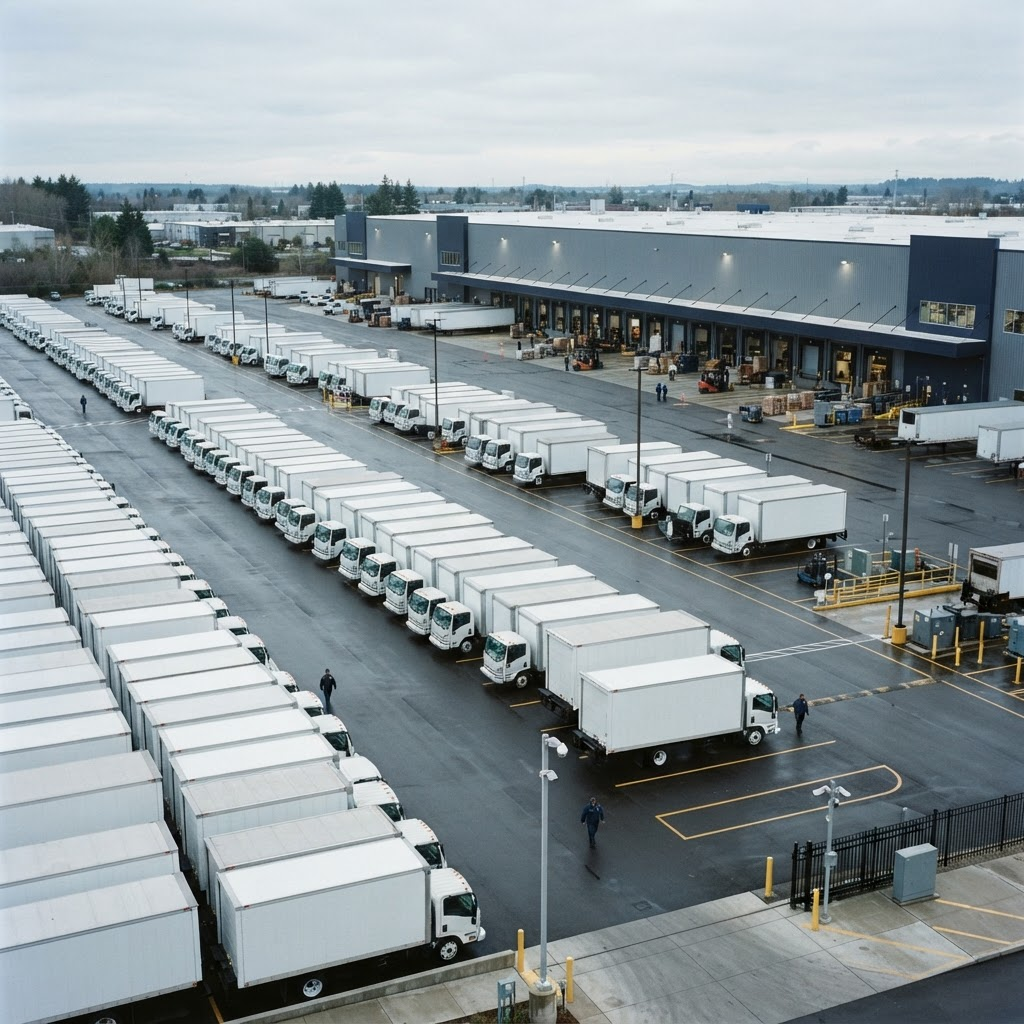
Fleet vehicles don’t always finish their working life where they started it. As operations grow, rebalance or rebrand, vehicles are frequently redeployed — reassigned to a different market, a different operation, or a different brand. Redeployment reconditioning is the work that prepares a vehicle for that next chapter.
What redeployment means
Redeployment is the alternative to retirement. Instead of selling or scrapping a vehicle, the operator moves it to where it’s needed — a growing region, a new contract, or a different brand within the organization. The vehicle still has useful life; it just needs to arrive ready to represent its new assignment.
Why reconditioning comes first
A vehicle that has spent years in one operation carries the marks of that service — old branding, accumulated wear, cosmetic damage. Dropping it into a new market as-is undermines brand consistency and signals neglect. Redeployment reconditioning restores the vehicle to a consistent standard so it looks and performs like the rest of its new fleet.
- 1.Assessment of current condition and the receiving operation’s standard.
- 2.Removal or replacement of prior branding and graphics as needed.
- 3.Cosmetic reconditioning of wear, dents and scuffs.
- 4.Final presentation check against the new market’s requirements.
Why standardization matters across markets
When a single operator runs vehicles across multiple regions, consistency becomes a challenge. A vehicle reconditioned to one standard in one city should match a vehicle in another. This is where a network with standardized processes has an advantage — the same specification can be applied wherever the vehicle lands.
Fleet Reconditioning Services is built around this multi-market model, with the goal that a single fleet relationship can extend across operating territories as the network grows — so redeployed vehicles meet the same standard no matter where they move.
Frequently asked questions
- What is fleet redeployment?
- Redeployment is reassigning a vehicle to a new market, operation or brand instead of retiring it. It extends the asset’s useful life and typically requires reconditioning to bring the vehicle up to the receiving operation’s standard.
- When should a fleet redeploy instead of retire a vehicle?
- When the vehicle has enough remaining useful life that reconditioning and transferring it delivers a better return than remarketing it. The decision comes down to remaining life, reconditioning cost and resale value.
How FRS can help
Fleet Reconditioning Services
The FRS Editorial Team publishes educational guidance on commercial fleet reconditioning, fleet uptime and vehicle lifecycle management, drawing on more than three decades of reconditioning and technician-training experience across the Fleet Reconditioning Services and Ding King organizations.