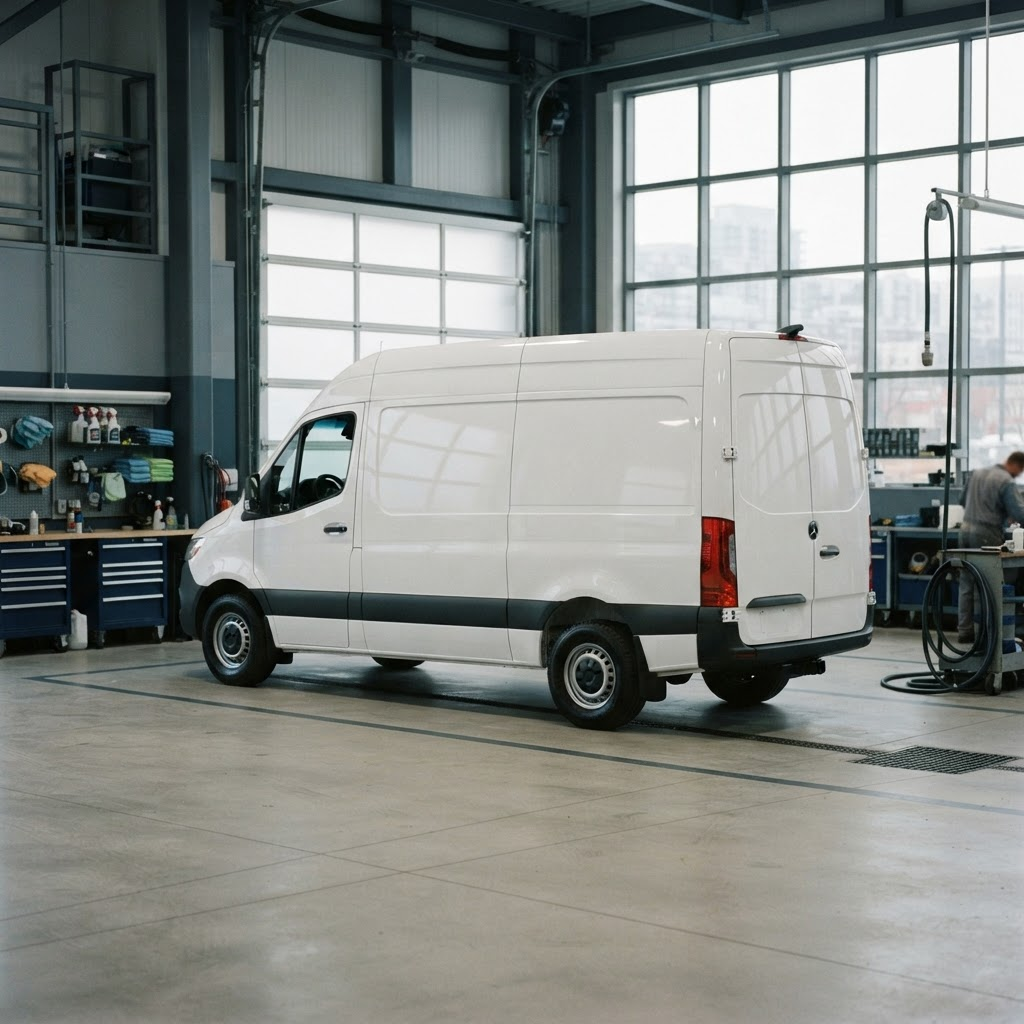

In last-mile delivery, a vehicle only earns its keep when it’s running a route. The moment it enters a repair queue, it stops generating value — and the true cost of that idle time is almost always larger than the repair invoice itself.
The hidden cost stack of downtime
When operators think about repair cost, they usually think about the bill. But for a high-utilization delivery fleet, the repair cost is only one layer. The full cost of downtime typically includes:
- Lost route capacity — the deliveries that vehicle would have completed.
- Backfill cost — renting, borrowing or reshuffling vehicles to cover the gap.
- Labor friction — drivers and dispatchers absorbing the disruption.
- Transport time — the hours or days spent shuttling the vehicle to and from a shop.
- Schedule risk — the knock-on effect on service commitments during peak periods.
Transport time is the silent killer
A repair that takes a few hours of actual labor can still cost a fleet several days once you count the round trips to and from the shop, waiting for an estimate, and waiting in the queue. For a fleet, the clock that matters isn’t “time on the lift” — it’s “time the vehicle is unavailable.”
This is why the location of service matters so much. Work performed on-site at the depot removes the transport legs entirely, which is frequently where most of the downtime actually hides.
Designing service around uptime
Fleets that take downtime seriously tend to prioritize three things: fast turnaround, service that comes to the vehicle, and predictable scheduling that fits around routes rather than fighting them. Fleet Reconditioning Services was built around exactly this model — targeting 24–72 hour turnaround and delivering qualifying work on-site, so vehicles spend their time on routes instead of in transit to a shop.
For a delivery fleet, uptime isn’t a maintenance metric — it’s the business model.
Frequently asked questions
- How do you calculate the cost of fleet downtime?
- Start with lost revenue or route capacity per vehicle per day, then add backfill costs, labor disruption and transport time. For last-mile fleets, these indirect costs usually exceed the repair bill itself.
- How can last-mile fleets reduce downtime?
- Reduce the time vehicles spend unavailable — not just time under repair. On-site service, fast turnaround and scheduling that works around routes all cut the transport and queue time that drives most downtime.
How FRS can help
Fleet Reconditioning Services
The FRS Editorial Team publishes educational guidance on commercial fleet reconditioning, fleet uptime and vehicle lifecycle management, drawing on more than three decades of reconditioning and technician-training experience across the Fleet Reconditioning Services and Ding King organizations.